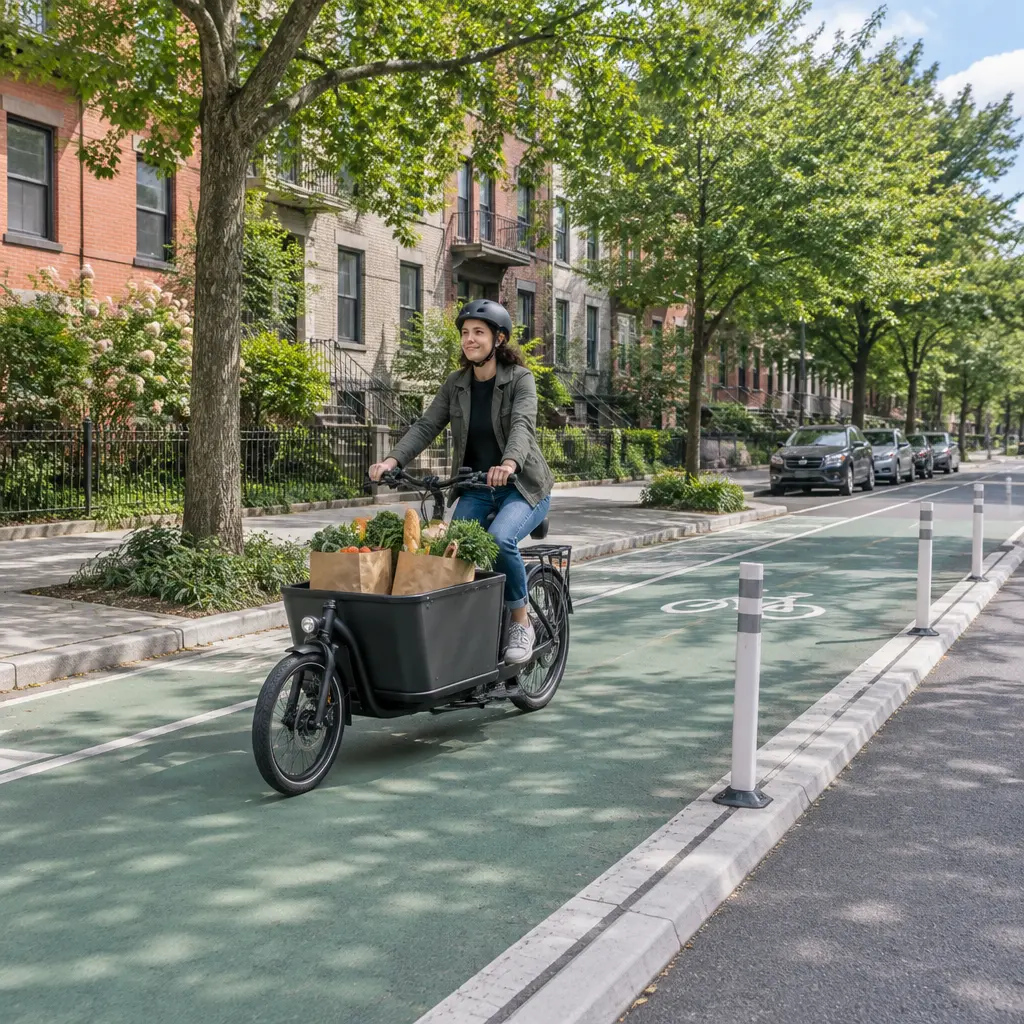
Cargo bikes are bicycles built to carry people or goods, and electric-assist cargo bikes add a motor that helps riders move heavy loads without replacing pedaling. Their versatility comes from combining substantial carrying capacity with access to streets, paths, and parking spaces that can be difficult for cars. For households and organizations, they can replace selected car trips—especially school runs, shopping, and local deliveries—while retaining a car or other option for longer, less suitable journeys. The case is strongest when trips are short, routes are safe, and the bike’s payload, range, and weather protection fit the job.
Cargo-bike versatility makes heavy-duty electric hauling practical
A cargo bike is a bicycle designed with an extended frame, reinforced rack, or dedicated cargo box for carrying goods or passengers. Electric assistance does not turn it into a motorcycle: the rider still pedals, while a motor supports acceleration and climbing within the system’s limits. This distinction matters because cargo-bike capability is determined not only by motor power, but also by the manufacturer’s payload rating, battery, brakes, tires, frame, and the rider’s ability to control the loaded vehicle.
The opportunity is substantial, though it should not be overstated. The U.S. Environmental Protection Agency reports that transportation accounted for 28% of U.S. greenhouse-gas emissions in 2022, making lower-emission travel a relevant part of climate policy. Cargo bikes cannot replace every car journey, but they can shift suitable local trips away from cars. Their usefulness depends on the whole trip: cargo-bike purchase and maintenance, secure storage, charging, route conditions, weather, and the availability of a car, transit, or delivery service for trips beyond the bike’s practical range.
Cargo-bike capacity supports versatile car-trip replacement
Cargo-bike capacity means the load a particular bike can carry safely, as specified by its manufacturer. It is not a single universal figure: some ratings refer to the total permitted weight of rider, bike, and cargo, while others specify a maximum load for the cargo area or rack. Buyers should check exactly what the stated rating includes and follow the lowest relevant limit. A higher number alone does not establish that a bike is safe for every load or route.
The main forms include longtails, which extend the rear rack for passengers or bags; front-loading bakfiets-style bikes, which place a box between the rider and front wheel; and compact cargo bikes, which use shorter frames and smaller wheels to balance carrying ability with easier storage. Trailers and cargo trikes can serve particular hauling needs, but their turning, parking, and handling differ from those of two-wheeled bikes. These design categories connect cargo capacity to the next practical question: what is being carried, and how often?
Longtail cargo bikes carry passengers and everyday loads
A longtail is a bicycle with an extended rear frame or rack, typically configured with passenger seats, footrests, panniers, or a combination of accessories. Its narrower profile can make it easier to store and maneuver than a large front-box bike, while still carrying groceries, school bags, or children within the model’s stated limits. Passenger use requires equipment and seating approved by the manufacturer; a rack’s apparent strength is not a substitute for a rated passenger setup.
For a household, a longtail can combine a school drop-off with shopping or errands, reducing the need to make separate car journeys. Before buying, measure the intended storage space, verify the loaded bike’s length and turning clearance, and check how accessories affect the permitted payload. A test ride with a representative load is particularly useful: weight changes braking distance, steering feel, and how the bike behaves when starting or stopping.
Front-loading cargo bikes accommodate bulky or sensitive cargo
A front-loading cargo bike—often called a box bike or bakfiets—has a cargo platform or box ahead of the rider. The design can make children or goods easy to supervise and may offer a stable, enclosed space for varied cargo. Electric assistance helps when starting under load or climbing, but the box’s size and weight can make tight turns, storage, and transport more challenging than with a standard bicycle.
This format is useful when cargo is awkward, needs to remain contained, or must be carried alongside passengers. Its suitability depends on box dimensions, payload limits, braking capability, and the width of the routes and doorways it must use. A family considering one should check whether it fits a garage or secure cycle store; an organization should consider loading height, lockable cargo protection, and where staff can park during deliveries.
Cargo trikes and trailers serve specialized hauling roles
A cargo trike uses three wheels for a broad cargo platform or box, while a trailer attaches behind a bicycle and adds a separate cargo compartment. These options can be useful for bulky loads, equipment, or work tasks that do not fit a conventional cargo-bike frame. They are not automatic upgrades: trikes need more road and storage width, and their cornering behavior differs from a two-wheeler; trailers add length and can affect braking and maneuverability.
Operators should evaluate the complete combination—bike, trailer, load, brakes, and route—rather than relying on the capacity of one component in isolation. The Federal Highway Administration’s National Household Travel Survey provides a useful broader context: most U.S. household travel consists of short trips, although the exact share varies by distance threshold and survey measure. Short trips may be candidates for cargo-bike substitution, but distance alone is not enough; hills, road safety, weather, and cargo weight also matter.
Electric assistance expands cargo-bike range and usability
Electric assistance is pedal-linked motor support supplied by a battery-powered system. It can reduce the effort needed to accelerate a heavy bike or climb a hill, helping make loaded riding more accessible. It does not remove the need to pedal, plan a route, or obey applicable local rules. In the United States, e-bike definitions and access rules vary by state and jurisdiction, so riders should confirm the classification of their specific model and where it may be used.
A motor’s advertised output does not by itself establish real-world hauling ability. A practical assessment considers the bike’s permitted total weight, motor and battery specifications, gearing, brakes, tire capacity, and the terrain and distance expected. The connection between assistance and capacity is therefore direct but limited: a motor can make a rated load easier to move, yet it cannot raise the manufacturer’s safe payload rating.
Battery range depends on load, terrain, and riding conditions
Battery range is the distance an e-bike can travel before its battery needs recharging, and a manufacturer’s estimate should be treated as conditional rather than guaranteed. Greater cargo weight, steep climbs, frequent stops, high assistance settings, cold conditions, tire pressure, and battery age can reduce distance. Riders planning regular work or school trips should test the route under realistic conditions and retain a reserve for detours or unexpected delays.
The U.S. Department of Energy’s Alternative Fuels Data Center notes that e-bike range varies with factors including battery capacity, terrain, rider input, and assistance level. That variability makes a single range figure an incomplete buying criterion. For daily hauling, a reliable charging routine, a removable battery where appropriate, and access to secure charging can be as important as the maximum advertised distance.
Braking and load control are essential to safe hauling
Load control describes the rider’s ability to start, steer, and stop a bike carrying cargo. Added mass affects acceleration and stopping, while a high or unevenly distributed load can change balance and handling. Cargo should be secured, kept within the bike’s ratings, and distributed as the manufacturer recommends. Riders should practice at low speed before carrying passengers or valuable goods in traffic.
The U.S. Consumer Product Safety Commission advises consumers to use e-bikes that meet applicable safety standards and to follow manufacturer guidance for batteries and charging. For hauling, that general safety advice should be paired with regular checks of brakes, tires, lights, fasteners, and cargo restraints. A heavily loaded bike also needs a route that allows safe stopping and turning; a protected lane or low-speed street can make a greater difference than additional motor assistance.
Car-trip replacement works best for suitable daily journeys
Car-trip replacement is the substitution of a cargo-bike journey for a journey that would otherwise have been made by car. It is most credible when evaluated trip by trip, rather than by assuming one bike can replace every vehicle function. A household might use a cargo bike for school, groceries, and local appointments while keeping a car for long distances, severe weather, or passengers and loads the bike cannot safely accommodate.
The International Transport Forum has documented cargo-bike use in urban freight and last-mile delivery, where compact vehicles can serve locations that are difficult for larger vans to access. Such examples show the operational potential of cargo bikes, but outcomes depend on local conditions and should not be generalized into a universal claim that a bike replaces a fixed number of cars or delivery vehicles. A meaningful assessment tracks actual trips shifted, cargo carried, operating costs, and any remaining vehicle use.
Household errands and school runs are common use cases
Household use combines passenger transport and everyday goods hauling. A cargo bike can make a short school run, grocery trip, or visit to a nearby service practical without a car, particularly when destinations are connected by safe cycling routes. The right model depends on passengers’ ages and needs, total load, parking, and whether the route includes steep slopes or high-speed traffic.
A household can begin with a trial period or occasional rental, if available, and record which journeys are genuinely replaced. This avoids treating theoretical capacity as proof of actual use. It also exposes practical barriers—such as carrying a child’s school equipment, securing the bike overnight, or riding in rain—before a major purchase.
Commercial delivery benefits depend on route design
Commercial cargo-bike delivery moves parcels, food, tools, or supplies by bicycle, often for short urban routes. A business may use a cargo bike for a final delivery leg, operate from a neighborhood microhub, or assign bikes to repeat service routes. The model can reduce vehicle access and parking problems in dense districts, but its business case depends on labor, loading time, cargo security, maintenance, weather, and delivery density.
The European Cyclists’ Federation has reported that cargo bikes can be effective for a share of urban freight journeys, but the result depends on the type of shipment and operating context. Businesses should treat such findings as evidence of potential, not as a promise for every fleet. A pilot should compare delivery completion, cost per stop, payload utilization, vehicle-kilometers avoided, and worker safety against the existing method.
Infrastructure and ownership determine real-world versatility
Cargo-bike versatility is partly a property of the surrounding transport system. Protected routes, safe intersections, secure parking, accessible charging, and repair services make it easier to replace routine car trips. Conversely, narrow cycleways, stairs, theft risk, and restrictions on e-bike access can undermine the value of even a capable bike. Planning should therefore consider both the vehicle and the places where it must travel, stop, load, and recharge.
The National Association of City Transportation Officials’ design guidance emphasizes that bicycle networks should be planned as connected systems, not isolated segments. For cargo-bike users, continuity matters because a route must accommodate a longer or wider vehicle and allow safe movement with a load. Cities can support adoption through suitable cycleway design, secure on-street parking, and clear rules, while households and businesses can assess route quality before committing to a purchase.
Total cost includes more than the purchase price
Total cost of ownership includes the purchase price plus maintenance, accessories, replacement parts, charging, storage, insurance where applicable, and eventual battery replacement. A cargo bike may avoid fuel, parking, or some vehicle costs when it replaces car journeys, but those savings are not guaranteed and depend on how much the bike is used and what costs it actually displaces. Comparing realistic annual use is more useful than comparing sticker prices alone.
A cost comparison should include a suitable lock, weather protection if needed, child-carrying equipment, and the expense of maintaining a heavier e-bike. Buyers should also confirm local incentives and warranty terms rather than assuming a rebate applies. For organizations, capital cost should be evaluated alongside staff training, secure fleet storage, charging arrangements, and the operational cost of any delivery hub.
A practical trial reveals the right vehicle and route
A trial is a structured test of a cargo bike using the rider, load, and routes expected in regular use. It should include a realistic payload, a hill or stop-start section if relevant, a parking test, and braking practice in a safe area. Riders can compare longtail, front-loading, and other formats before deciding which configuration fits their daily tasks.
For a household, a short trip log can show how many car journeys are candidates for substitution and which barriers prevent it. For a business, a pilot should document route time, delivery volume, maintenance, missed or delayed trips, and safety incidents. This evidence-based approach links vehicle choice to actual needs and helps prevent a nominally high-capacity bike from being purchased for work it cannot reliably perform.
Conclusion: cargo-bike versatility is strongest when matched to the task
Cargo-bike capacity, electric assistance, and practical trip replacement work together, but each has limits. Longtails suit many passenger and errand needs; front-loading bikes handle contained or bulky cargo; and trikes or trailers can serve specialized loads. A motor can ease the effort of hauling, while payload ratings, battery range, braking, route safety, and storage determine whether the setup is suitable in everyday use.
For households and businesses, the strongest case is targeted substitution of short, repeatable car trips—not an assumption that every journey can be made by bike. Start by checking the manufacturer’s weight limits, testing the loaded route, and assessing secure storage and charging. Then measure actual use and trips replaced. Cities can strengthen the benefits by building connected, safe cycling networks and providing secure places to park. With a well-matched bike and supportive conditions, heavy-duty electric hauling can make local mobility more practical while reducing reliance on cars for suitable journeys.
Sources: U.S. Environmental Protection Agency, Sources of Greenhouse Gas Emissions, https://www.epa.gov/ghgemissions/sources-greenhouse-gas-emissions; Federal Highway Administration, 2022 National Household Travel Survey, https://nhts.ornl.gov/; U.S. Department of Energy, Alternative Fuels Data Center, Electric Bicycles, https://afdc.energy.gov/vehicles/electric_bikes.html; U.S. Consumer Product Safety Commission, E-Bike Safety, https://www.cpsc.gov/Safety-Education/Safety-Education-Centers/E-Bike-Safety; International Transport Forum, Innovations for Better Rural Mobility, https://www.itf-oecd.org/; European Cyclists’ Federation, Cargo Bikes and Urban Logistics, https://ecf.com/; National Association of City Transportation Officials, Urban Bikeway Design Guide, https://nacto.org/publication/urban-bikeway-design-guide/