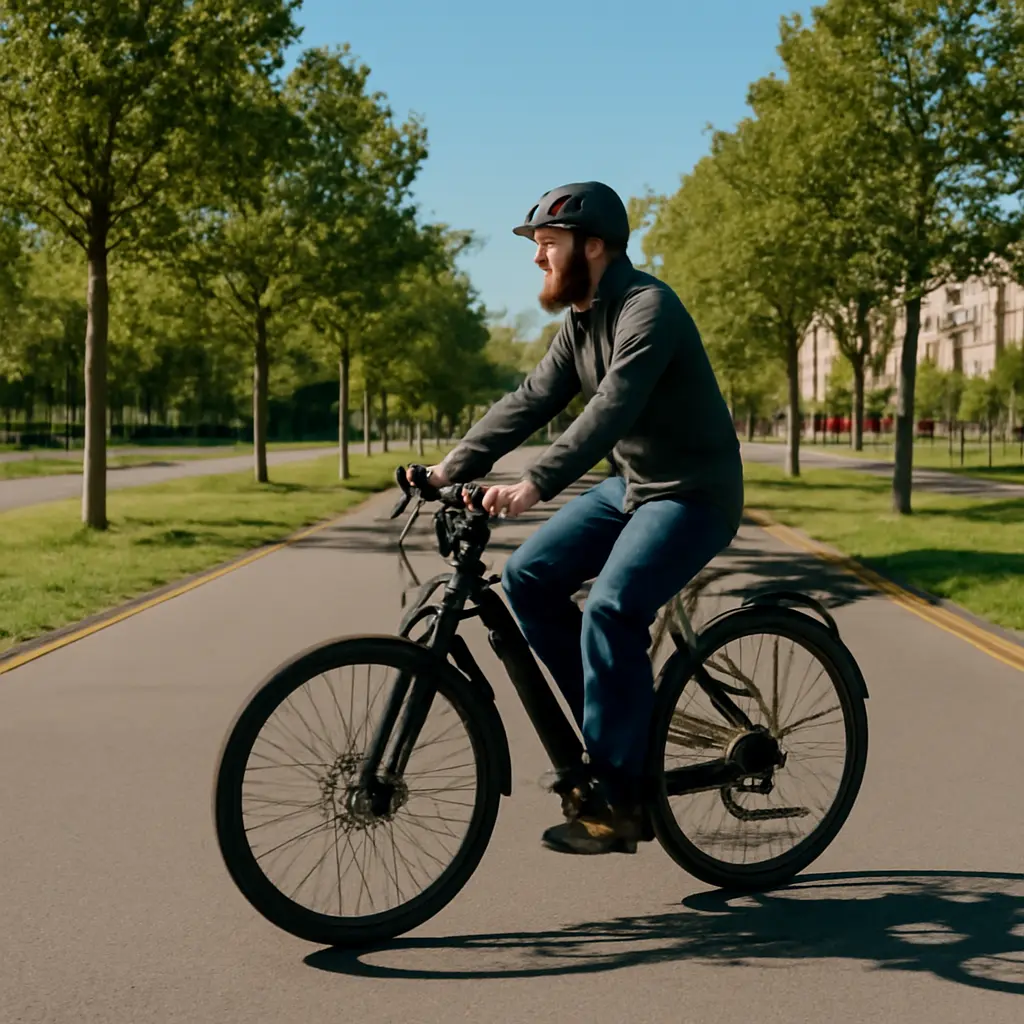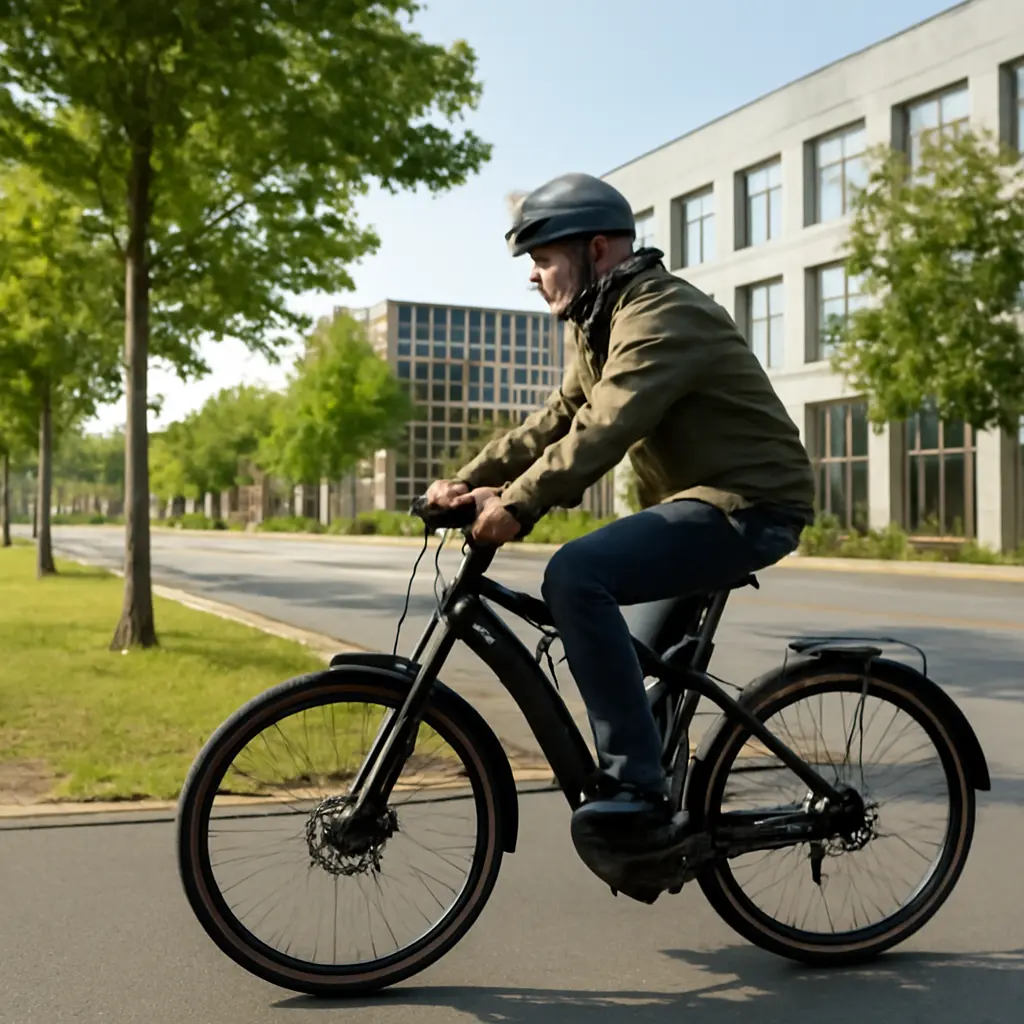
An electric bicycle, or e-bike, is a bicycle equipped with an electric motor that assists the rider while pedaling and, on some models, can provide power through a throttle. By reducing the effort needed to climb hills, cover longer distances, or carry cargo, an e-bike can turn a stressful or car-dependent commute into a more manageable daily ride. The U.S. Department of Energy estimates that e-bikes use about 1 kilowatt-hour of electricity to travel roughly 1,000 miles, illustrating their potential efficiency. Their impact depends on choosing the right type, understanding costs and safety, and making the most of the health and transportation benefits.
E-Bike Commuting Benefits: A More Practical Daily Ride
An e-bike commute is a regular trip made on a bicycle with electric assistance. The National Institute for Transportation and Communities’ 2018 North American survey of e-bike users found that respondents substantially increased their cycling after getting an e-bike, while many reported replacing car trips. The findings describe surveyed riders rather than every e-bike owner, but they show how assistance can make cycling feasible for people who might otherwise drive.
Pedal assistance reduces effort without removing exercise
A pedal-assist e-bike uses a motor to supplement the rider’s pedaling. Riders can generally select an assistance level, balancing exertion against battery use and speed. In a 2019 study published in Transportation Research Interdisciplinary Perspectives, researchers found that e-bike riding can provide meaningful physical activity, although the intensity is typically lower than conventional cycling. The practical advantage is consistency: a rider can use more assistance on hills or when tired and still pedal for much of the trip.
Longer distances and hills become more manageable
Motor assistance can reduce the physical and time barriers that make a longer commute, steep route, or headwind discouraging. This does not mean every e-bike commute will be faster than driving; traffic, parking, route quality, and charging access all matter. But an e-bike may make a route more predictable by helping a rider maintain effort across challenging terrain. A useful comparison is to test the same route at different assistance levels and record ride time, battery use, and comfort.
Replacing car trips can extend the benefit beyond the rider
When an e-bike replaces a car trip, it can reduce fuel use and tailpipe emissions for that journey. The scale of the benefit depends on the vehicle displaced, the electricity supply, and whether the ride truly substitutes for a motor-vehicle trip. E-bikes can also make errands easier: racks, panniers, and cargo models help carry groceries, work equipment, or child passengers where the bike and local rules permit. The Department of Energy’s estimate of about 1 kilowatt-hour per 1,000 miles indicates that charging generally requires little electricity compared with driving a car.
E-Bike Types: Matching Motor Systems to Everyday Needs
E-bike types differ in how the motor delivers power, how much the rider must pedal, and what the bike is designed to carry. In the United States, a common three-class framework distinguishes bikes by assistance method and speed limits, but definitions and access rules vary by state, municipality, trail, and land manager. The California Vehicle Code, for example, defines three classes and sets a 20 mph motor-assistance limit for Class 1 and Class 2, and a 28 mph limit for Class 3.
Class 1: pedal-assist riding
A Class 1 e-bike provides motor assistance only while the rider pedals, with assistance stopping at 20 mph under California’s definition. This type often suits commuters who want an assisted but bicycle-like ride. Because access rules differ, check local regulations before using shared paths, trails, or protected lanes.
Class 2: pedal assist with a throttle
A Class 2 e-bike can provide assistance through pedaling and a throttle, with motor assistance stopping at 20 mph under California’s definition. Throttle operation can help with starts, low-speed maneuvering, or moments when pedaling is difficult. Riders should learn how the throttle responds before riding in crowded spaces, since immediate acceleration can surprise both the rider and nearby people.
Class 3: higher-speed pedal assist
A Class 3 e-bike provides pedal assistance up to 28 mph under California’s definition. It can be useful for longer commutes where higher assisted speeds are appropriate, but it requires extra attention to braking distance, visibility, and local access rules. Equipment requirements, including whether a speedometer or helmet is required, can depend on jurisdiction.
Cargo and utility e-bikes
Cargo e-bikes are designed to carry loads using extended frames, sturdy racks, or cargo boxes. They can replace some household or delivery trips, but their added weight affects handling and stopping distance. Before buying, check the manufacturer’s maximum load, confirm that the battery range suits the intended trips, and practice riding with a gradually increased load.
E-Bike Costs and Range: Planning for Reliable Daily Use
The real cost of an e-bike includes more than the purchase price: accessories, maintenance, secure parking, replacement parts, and charging all contribute. The Department of Energy’s low electricity-use estimate suggests that energy is often a small operating expense, but battery size, electricity rates, terrain, rider and cargo weight, temperature, tire pressure, and assistance level influence actual range. Treat a manufacturer’s range figure as a guide rather than a guarantee.
Estimate range around your actual route
Battery range is the distance a bike can travel before its battery needs recharging. To estimate whether a model fits a commute, consider the round-trip distance, elevation gain, expected cargo, and a reserve for weather or detours. A simple planning chart can compare route distance with a conservative estimate of the bike’s range at the assistance setting you expect to use. Riders with no convenient charging at work should prioritize enough capacity for the full trip and a practical reserve.
Budget for maintenance and secure storage
E-bikes share many service needs with conventional bicycles, including tire, brake, chain, and drivetrain maintenance; heavier bikes and higher speeds can increase wear. Ask a local shop whether it services the model and can obtain compatible parts. A strong lock, indoor or secure parking, and appropriate insurance may also be worthwhile. These measures help protect a significant purchase and make everyday use more dependable.
E-Bike Safety: Building Good Habits for Every Ride
E-bike safety combines rider skill, suitable equipment, a well-maintained bicycle, and predictable road behavior. The National Highway Traffic Safety Administration advises cyclists to wear a properly fitted helmet, obey traffic laws, ride with traffic, and stay visible. E-bikes can accelerate quickly and may be heavier than ordinary bicycles, so riders benefit from practicing before entering complex traffic.
Practice handling, braking, and turning
Start in a quiet, open area and practice starting, stopping, turning, shifting assistance levels, and using the throttle if equipped. Test braking at low speeds, then repeat gradually at higher speeds. Leave extra following distance and slow before turns, especially when carrying cargo or riding on wet, loose, or uneven surfaces.
Choose visibility and protective equipment
Use a helmet that fits correctly, working front and rear lights, and reflective or high-visibility clothing when conditions call for it. Keep lights on in low visibility and check that they are charged. Before each ride, inspect tires, brakes, lights, and battery mounting; routine checks can catch problems before they become hazards.
Charge and store lithium-ion batteries responsibly
E-bike batteries require careful charging and storage. The U.S. Consumer Product Safety Commission recommends using the charger supplied with the product, following the manufacturer’s instructions, and avoiding charging while asleep or away from home. Use products and replacement batteries that meet relevant safety standards, stop using a battery that is damaged or behaving unusually, and keep charging equipment away from exits and combustible materials.
E-Bike Selection: Choosing a Bike for Your Routine
The best e-bike is one that fits the rider, route, budget, and intended use. A test ride can reveal differences that specifications alone cannot: frame fit, balance, motor response, braking feel, and ease of mounting all affect whether the bike will be comfortable enough for daily use.
Match the bike to the commute
For a mostly flat paved route, a commuter model may be sufficient; steep terrain or frequent cargo may call for a different motor, gearing, tires, and frame design. Check the bike’s total weight and whether you need to carry it upstairs or lift it onto a vehicle. Confirm that the frame size and riding position are comfortable, and that the model’s legal class is allowed on your intended routes.
Evaluate service, warranty, and battery support
Ask about warranty coverage, battery replacement costs, service availability, and the expected process for software or electrical repairs. A lower purchase price may not be a good value if local shops cannot support the system or replacement components are difficult to obtain. A reputable retailer can also help set up the bike and explain safe charging and maintenance.
Conclusion: An E-Bike Can Make Everyday Travel More Achievable
E-bike commuting can make hills, distance, and daily errands easier to manage while still allowing riders to pedal and be physically active. Understanding the differences among Class 1, Class 2, Class 3, and cargo models helps match a bike to the route and local rules. Realistic range planning, safe riding habits, responsible battery care, and access to maintenance make the benefits more dependable. Start by mapping a regular trip, test-riding suitable models, and checking local cycling and e-bike regulations; then consider replacing one short car journey at a time.
Sources: U.S. Department of Energy, “Which is Greener: Car, Bus, or Bike?”, https://www.energy.gov/eere/vehicles/articles/fotw-1249-june-13-2022-which-greener-car-bus-or-bike; National Institute for Transportation and Communities, “The E-Bike Potential: Estimating the Effect of E-Bikes on Person Miles Traveled and Greenhouse Gas Emissions,” https://nitc.trec.pdx.edu/research/project/1041; Castro, A. et al., “Physical activity of electric bicycle users compared to conventional bicycle users and non-cyclists: Insights based on health and transport data from an online survey in seven European cities,” Transportation Research Interdisciplinary Perspectives, 2019, https://doi.org/10.1016/j.trip.2019.100017; California Legislative Information, California Vehicle Code, Section 312.5, https://leginfo.legislature.ca.gov/faces/codes_displaySection.xhtml?sectionNum=312.5.&lawCode=VEH; National Highway Traffic Safety Administration, “Bicycle Safety,” https://www.nhtsa.gov/road-safety/bicycle-safety; U.S. Consumer Product Safety Commission, “Lithium-Ion Battery Safety,” https://www.cpsc.gov/Safety-Education/Safety-Education-Centers/Lithium-Ion-Battery-Safety.