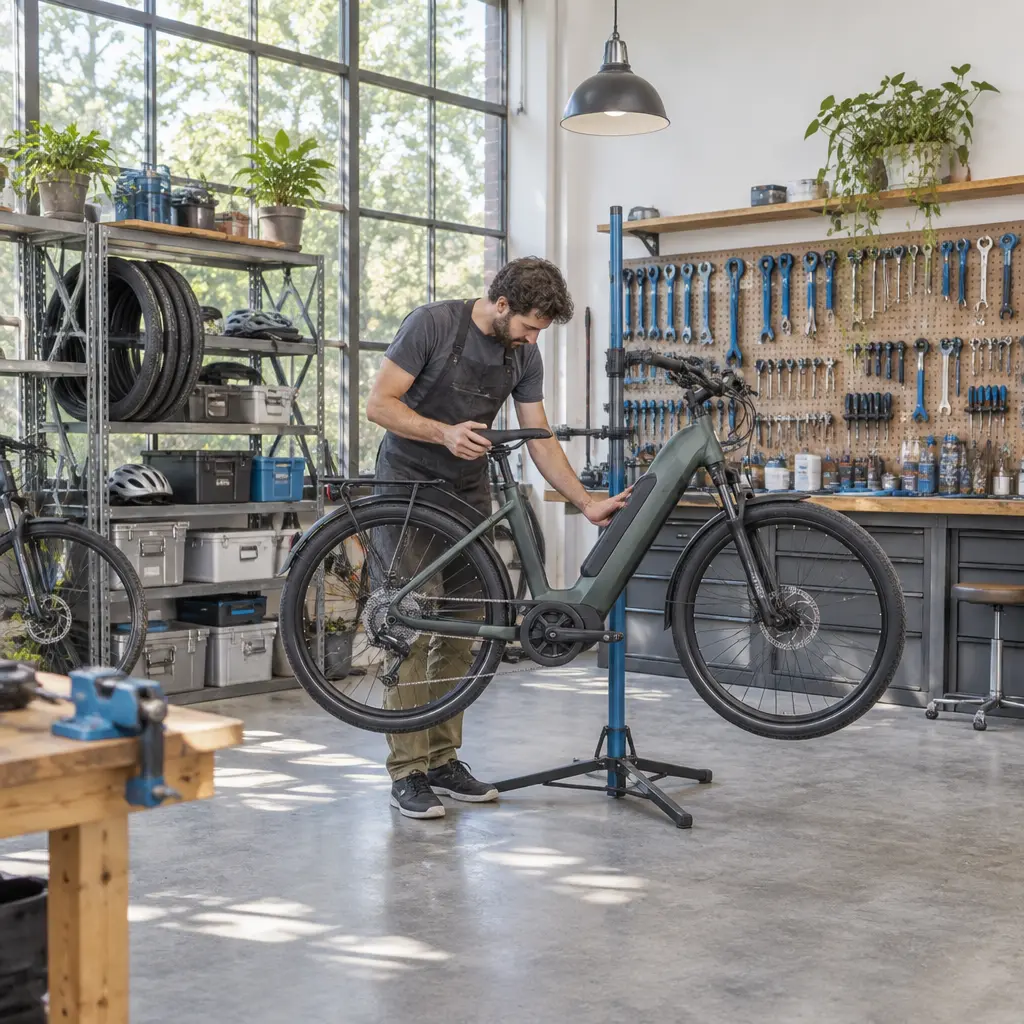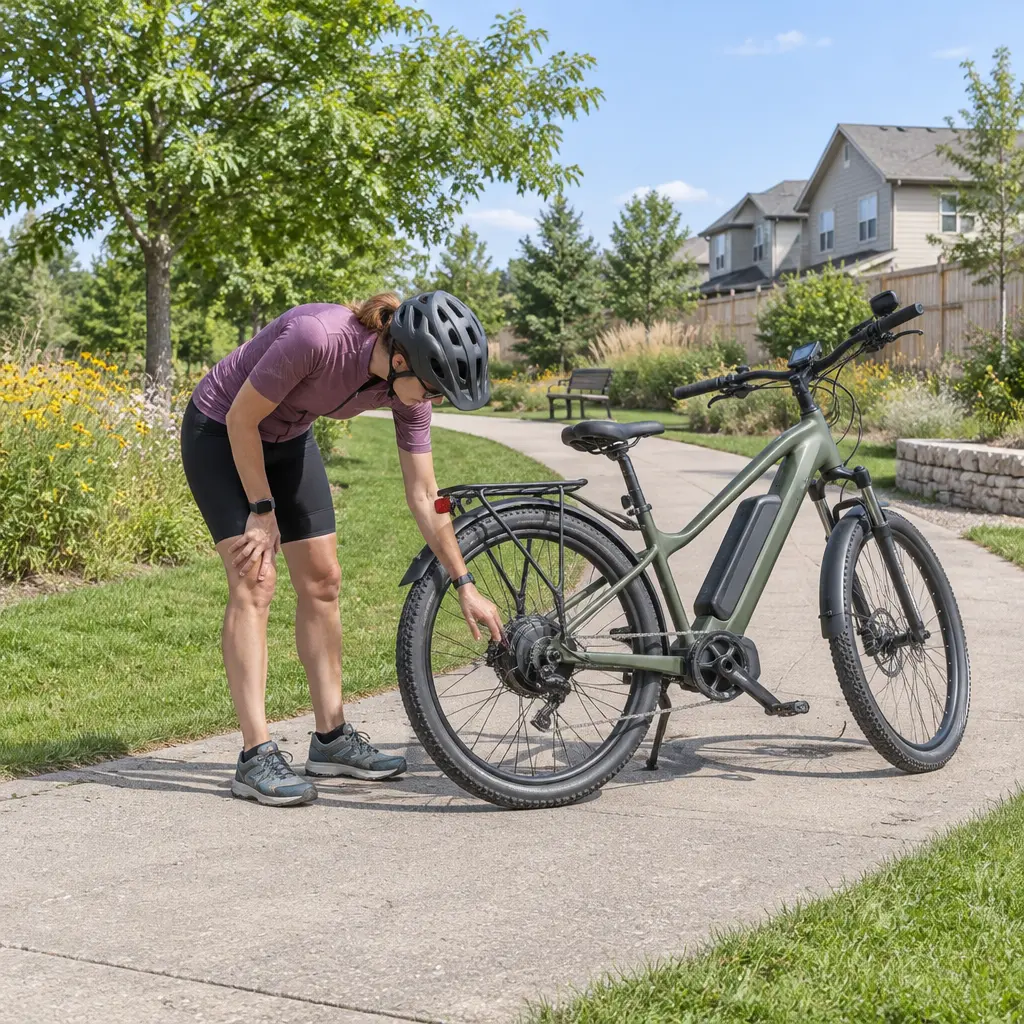
An electric bike, or e-bike, is a bicycle with an electric motor that assists the rider while pedaling, or—in some designs—moves the bike through a throttle. The best beginner motor depends less on a “best motor” label than on the route: a hub motor is often a straightforward match for flatter streets and steady commuting, while a mid-drive can feel more capable on sustained hills because it uses the bike’s gears. Terrain, rider effort, load, range, and local e-bike rules all matter. The U.S. Consumer Product Safety Commission describes the common low-speed electric bicycle category as having fully operable pedals, a motor under 750 watts, and a top motor-powered speed under 20 mph on level ground; state and local definitions can differ. This guide compares motor types, explains how hills and surfaces change the choice, and offers a practical test-ride checklist.
How motor type matches electric bike terrain
A motor type is the placement and drive arrangement through which an e-bike’s motor delivers assistance. Bosch eBike Systems distinguishes hub-drive systems, located in a wheel hub, from mid-drive systems, positioned at the crank and driving through the bicycle’s chain and gears. That difference shapes how assistance feels, how the bike handles climbing, and what maintenance may involve. It does not, by itself, determine range or hill-climbing ability: motor torque, controller programming, battery capacity, gearing, tire choice, and rider input also count.
For beginners, the practical categories are rear-hub, front-hub, and mid-drive motors. Rear hubs are common on commuter and recreational bikes; front hubs are less common and can suit simple, relatively flat use; mid-drives are often selected for varied or steep terrain. These are tendencies, not guarantees. A well-designed hub bike can handle moderate climbs, and a mid-drive is not automatically the right choice for every rider.
Rear-hub motors for flatter routes and everyday riding
A rear-hub motor sits in the back wheel and turns that wheel directly. Its assistance can feel like a push from behind, and the motor does not rely on the chain to transfer its power. For beginners riding paved paths, neighborhood streets, or routes with gentle grades, a rear hub can offer a relatively simple, predictable experience. Because the motor is in the wheel, rear-wheel removal for a flat tire may require extra care or a shop’s help, depending on the design.
Check the bike’s stated torque and support policy rather than judging it by wattage alone. Watts describe power, while torque—usually stated in newton-metres—helps describe turning force. Neither number alone predicts real-world performance, because gearing, wheel size, software, and the rider’s pedaling affect how assistance feels. Test the bike on a representative incline if hills are part of the regular trip.
Mid-drive motors for sustained climbs and varied terrain
A mid-drive motor is mounted near the pedals and applies assistance through the drivetrain. Since it can work with the bike’s gears, a rider can shift into a lower gear for a climb and keep pedaling at a comfortable cadence. This can make mid-drives a compelling option for steep or rolling routes, cargo, and off-road riding. The trade-off is that motor force passes through the chain and related drivetrain parts, so correct shifting and routine maintenance matter.
Bosch’s technical guidance emphasizes shifting to an appropriate gear and maintaining a smooth cadence to use a mid-drive effectively. Beginners should practice changing gears before a hill, rather than waiting until the bike is under heavy load. Ask a dealer about chain and cassette wear, replacement costs, and whether the system requires brand-authorized servicing; those details vary by model and are more useful than assuming every mid-drive has the same upkeep needs.
Front-hub motors for simple, mostly level trips
A front-hub motor sits in the front wheel and pulls the bicycle forward. It separates motor drive from the rear gears, which can simplify the drivetrain arrangement, but the added weight at the front can affect steering feel. On loose, wet, or steep surfaces, front-wheel traction may be a concern, so this layout is generally best considered for modest, predictable routes rather than demanding climbs or technical trails. A test ride is particularly important because handling depends on the bike’s geometry, weight distribution, and tires.
How terrain changes the motor choice
Terrain is the route’s real operating condition: its gradient, surface, stops, wind exposure, and carried load. A useful comparison begins with the whole trip, not just the steepest hill. The U.S. Department of Energy’s fuel-economy guidance for vehicles notes that energy use changes with speed, driving conditions, and load; e-bikes are different machines, but the broader lesson applies: demanding conditions draw more energy. For an e-bike, frequent acceleration, climbing, soft surfaces, low tire pressure, and heavy cargo can all reduce practical range.
Flat urban streets and paved paths
On mostly flat pavement, a rear-hub bike is often a sensible beginner shortlist choice if the rider wants uncomplicated assistance and the bike fits well. At this terrain level, comfort, reliable brakes, lighting, tire quality, and service access may matter more than buying the highest-torque motor. A front hub may also work for gentle routes, but the rider should check that steering feels stable and predictable.
Rolling routes and short, steep hills
For repeated short climbs, compare the motor’s torque rating, available low gears, and how naturally assistance responds when starting uphill. A mid-drive can make good use of low gearing, while a capable rear hub may suit riders who prefer not to manage gears as actively. Try starting from a stop on a slope if that reflects the route, and confirm that the bike can do so comfortably within its intended operating limits.
Long climbs, cargo, and mixed surfaces
Long climbs and heavy loads increase the importance of sustained assistance, suitable gearing, brakes, and battery capacity. A mid-drive is frequently worth testing for these conditions because its motor works through the gears. On gravel or uneven paths, however, tires, suspension, frame stability, and rider control are equally important; motor placement cannot compensate for unsuitable equipment or poor technique. If carrying children or cargo, use a bike explicitly rated for that load and verify the total permitted weight with the manufacturer.
Weather, wind, and stop-and-go riding
Headwinds, repeated starts, rain, and cold conditions can make a familiar route feel harder and may change energy consumption. For wet-weather commuting, prioritize dependable braking, tires suited to the surface, fenders, lights, and a battery system used according to its manual. No motor configuration makes an e-bike immune to reduced traction or longer stopping distances. The National Highway Traffic Safety Administration advises cyclists to make themselves visible and follow road-safety practices; e-bike riders should also check local rules governing where different classes may ride.
How to compare motor specifications and real range
Motor and battery figures are useful when read in context. Nominal motor power, peak output, torque, battery watt-hours, assistance modes, and the bike’s total weight describe different aspects of performance. There is no single range number that applies to every rider and route. Bosch eBike Systems’ range tools, for example, account for conditions such as assistance level, terrain, rider and bike weight, and temperature—factors that explain why manufacturer range claims should be treated as estimates rather than guarantees.
Watts, torque, and assistance feel
Watts indicate a rate of energy use or output, while torque indicates rotational force. A higher watt figure does not automatically mean a bike climbs better, feels smoother, or is legal for every public road. Compare the motor’s legal classification, the manufacturer’s continuous or nominal rating, torque, and the way assistance is delivered. Then ride the bike: a responsive, controllable system may be more useful to a beginner than a larger headline figure.
Battery capacity and realistic range
Battery capacity is commonly stated in watt-hours (Wh), a measure of stored energy. A larger capacity can support longer rides under comparable conditions, but range also depends on climbing, assist level, speed, temperature, tire pressure, and rider effort. Choose a battery with a practical reserve for the round trip and likely detours; do not plan around the most optimistic advertised figure. Follow the maker’s charging, storage, and temperature instructions, and use only compatible chargers.
Class, speed, and local rules
E-bike classifications regulate features such as motor assistance and maximum assisted speed, but definitions differ by jurisdiction. In the United States, PeopleForBikes describes a widely adopted three-class framework: Class 1 provides pedal assistance up to 20 mph; Class 2 includes a throttle and is limited to 20 mph; and Class 3 provides pedal assistance up to 28 mph, subject to state-specific rules. The Consumer Product Safety Commission’s federal low-speed electric bicycle definition is a separate product-safety definition, not a substitute for checking state, city, trail, or park access regulations. Confirm the rules where you plan to ride before buying.
A beginner’s selection and test-ride checklist
A short, structured test ride helps turn specifications into a decision. Bring a description of your usual route and intended cargo, and compare bikes in the assistance mode you expect to use. The League of American Bicyclists recommends safe riding practices and bicycle handling skills; beginners can build confidence by practicing starts, stops, turns, and gear changes in a quiet area before mixing with traffic.
- Map the everyday route, noting steepest grades, unpaved sections, typical wind, distance, and likely stops.
- Choose a motor layout to test: rear hub for straightforward flatter riding, mid-drive for gear-assisted climbing, and front hub only where its handling suits the route.
- Check fit, reach, saddle comfort, brake feel, tire type, lighting, and the bike’s maximum permitted rider-and-cargo weight.
- Ride a hill, if available. Try both a steady climb and a restart, and notice whether assistance feels smooth and manageable.
- Ask about battery capacity, realistic range estimates, warranty, local service, replacement parts, and drivetrain maintenance.
- Verify the e-bike class and local access rules, then budget for a correctly fitted helmet, a secure lock, and basic safety equipment.
For example, a beginner commuting on paved, mostly level streets with a modest daily distance might shortlist a rear-hub commuter with a comfortable riding position and dependable local support. A rider facing a long, steep climb while carrying groceries should test mid-drive models with suitable low gears and a battery sized for the full trip. These are starting points, not prescriptions: fit, price, serviceability, and a controlled test ride can change the recommendation.
Conclusion: match the motor to the route, not the sales pitch
The most useful beginner choice begins with terrain reality. Rear-hub motors can be a practical fit for flatter everyday routes, mid-drives merit close consideration for sustained climbs and varied loads, and front hubs are best assessed carefully for simple, level use. Terrain, torque, gearing, battery capacity, tires, brakes, local laws, and maintenance support work together; no one specification predicts the entire experience. Map your route, test ride on a representative incline, check local e-bike rules, and ask a nearby service provider about long-term support before purchasing.
Sources: U.S. Consumer Product Safety Commission, 16 CFR Part 1512, Requirements for Bicycles, https://www.ecfr.gov/current/title-16/chapter-II/subchapter-B/part-1512; Bosch eBike Systems, eBike Range Assistant, https://www.bosch-ebike.com/us/service/range-assistant; Bosch eBike Systems, eBike technology and riding tips, https://www.bosch-ebike.com/us/; PeopleForBikes, E-Bike Regulations, https://www.peopleforbikes.org/electric-bikes; U.S. Department of Energy, Fuel Economy in Cold Weather, https://www.fueleconomy.gov/feg/coldweather.shtml; National Highway Traffic Safety Administration, Bicycle Safety, https://www.nhtsa.gov/road-safety/bicycle-safety; League of American Bicyclists, Smart Cycling, https://bikeleague.org/ridesmart/.