
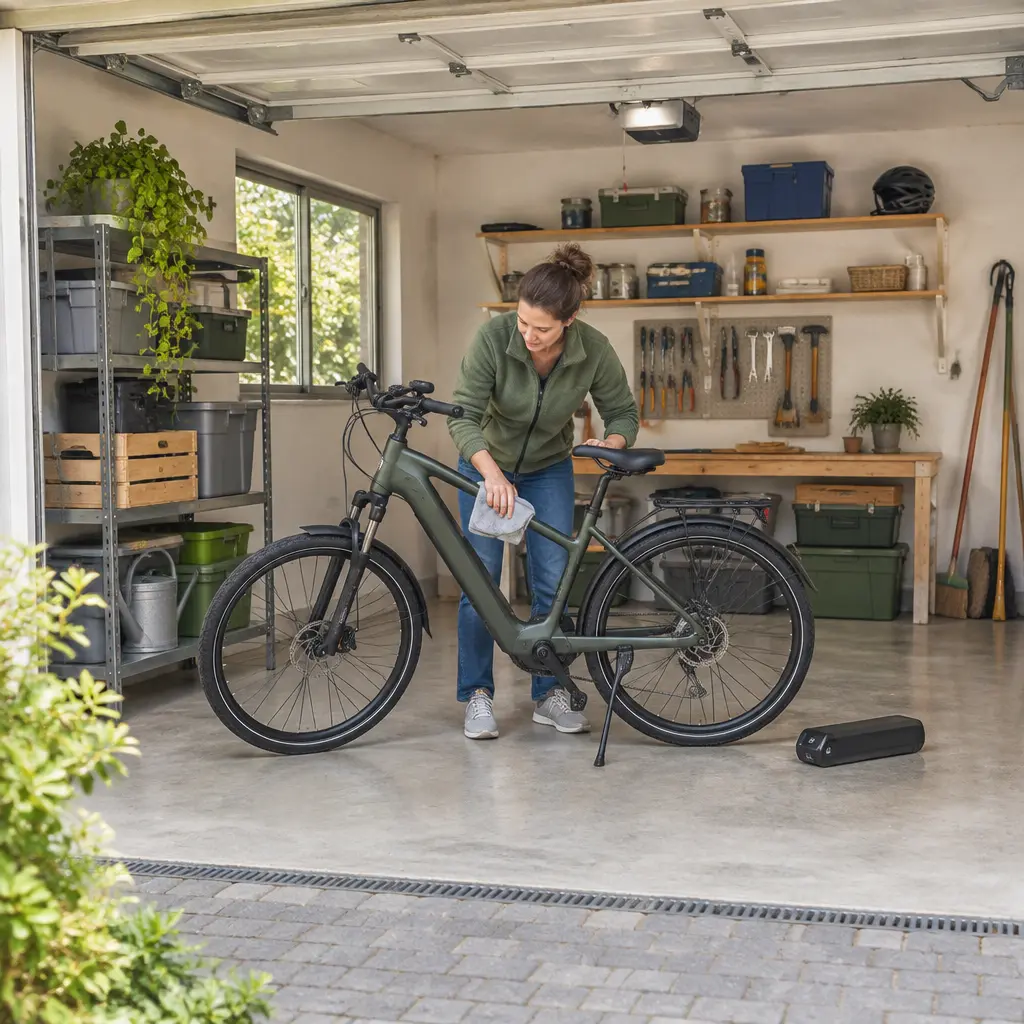
An e-bike’s electrical system comprises its battery, wiring, connectors, display, controller, and motor; electrical corrosion is the degradation of conductive metal surfaces through chemical reactions, often accelerated by moisture and contaminants. Proper storage helps prevent corrosion by keeping the bike and battery dry, clean, and within manufacturer-recommended temperature ranges. This routine matters because corrosion can increase electrical resistance, interrupt power, and damage components. The U.S. Fire Administration reports that lithium-ion battery fires can result from damage or improper use, reinforcing the importance of following battery-makers’ safety instructions. The practices below explain how storage conditions, cleaning, battery care, inspections, and seasonal routines work together to protect an e-bike.
Storage Habits Protect E-Bike Electrical Connections
Electrical corrosion prevention is the practice of reducing exposure to moisture, salts, dirt, and unsuitable temperatures that can degrade electrical contacts and wiring. Bosch eBike Systems’ care guidance emphasizes keeping the battery and contacts clean and dry and avoiding direct water exposure to electrical components. Corrosion may appear as green or white deposits, darkened metal, pitting, or a loose connection; however, visible residue is not required for a contact to be compromised.
The most vulnerable areas include battery terminals and their mating contacts, charging ports, display connectors, cable junctions, and wiring near the motor or controller. Water does not always cause immediate failure: moisture trapped in a connector can promote oxidation over time, while road salt and conductive grime can worsen the risk. A useful storage routine therefore combines a dry location, careful post-ride cleaning, safe battery handling, and periodic inspection.
Dry, sheltered storage limits moisture exposure
A sheltered, dry storage space reduces direct exposure to rain, condensation, and airborne contaminants. Store the bike indoors when possible, away from leaks, damp floors, and areas where temperature changes cause condensation. If indoor storage is unavailable, use a weatherproof cover that does not trap wet air against the bike; let the bike dry before covering it. Avoid leaving an e-bike outside for extended periods, especially in coastal or winter conditions where salt can reach exposed metal.
There is no single ideal storage temperature for every e-bike battery. Follow the specific battery manufacturer’s instructions, since limits and recommendations differ by model. As a general safety principle, do not store or charge a battery where it may freeze, overheat, or be exposed to direct sun. The U.S. Fire Administration advises using batteries and chargers according to their manufacturers’ instructions and avoiding damaged batteries.
Clean and dry contacts before putting the bike away
Cleaning for storage means removing grime without driving water into electrical openings. Wipe the frame and accessible exterior surfaces with a damp cloth, then dry them with a clean towel. Do not use a pressure washer or direct a hose at the battery mount, charging port, display, motor, or cable connections. Bosch’s e-bike care recommendations likewise caution against high-pressure cleaning because water can penetrate seals and electrical components.
Before cleaning around electrical contacts, turn the system off and remove the battery if the manufacturer permits it. Use a dry, lint-free cloth on accessible contacts; do not scrape them with metal tools or apply household oils, solvents, or contact sprays unless the manufacturer specifically approves the product. If a connector is wet, allow it to dry fully before reconnecting or charging. This routine also protects mechanical interfaces such as the battery rail, where dirt can interfere with a secure fit.
Battery Storage Preserves Connections and Safe Operation
Battery storage is the controlled handling of an e-bike battery when it is not in use, including decisions about where to keep it, whether to remove it from the bike, and how to prepare it for a long break. A removable battery can generally be stored separately in a cool, dry place, provided its contacts are protected and the manufacturer’s guidance is followed. Keeping it away from metal objects helps prevent accidental contact across terminals.
Battery storage and corrosion prevention are connected but not identical: keeping the battery dry protects its contacts, while correct temperature and charge practices support battery health. The U.S. Consumer Product Safety Commission recommends using the charger supplied with a micromobility product or a replacement approved by the manufacturer. A charger that does not match the battery system can create electrical and thermal hazards.
Store the battery according to its manufacturer’s guidance
For extended storage, consult the owner’s manual for the recommended charge level and inspection interval. Some manufacturers advise storing a battery partly charged rather than fully charged or fully depleted, but the correct range varies by product. Do not assume a generic percentage applies to every battery. Check the pack periodically, and recharge it only with the approved charger and in the conditions specified by the manufacturer.
Keep the battery away from heaters, open flames, direct sunlight, and locations that may become unusually hot. Do not store or charge a battery that is swollen, leaking, unusually hot, physically damaged, or emitting an odor. The U.S. Fire Administration identifies damage and improper charging or use as lithium-ion battery fire risks; a suspect pack should be taken out of service and handled using local fire-safety guidance and manufacturer instructions.
Keep charging ports and terminals protected, not sealed while wet
A charging-port cover helps keep out splashes and debris during ordinary storage, but it should only be closed when the port is clean and dry. Trapping moisture behind a cover can prolong contact with metal surfaces. Before charging, inspect the port and plug for dirt, corrosion, moisture, or bent parts. Do not charge if the connection looks damaged or if the battery or charger has been wet beyond the manufacturer’s stated limits.
For removable batteries, make sure the battery is seated correctly before riding and that the retaining mechanism works as intended. A loose fit can cause intermittent electrical contact and vibration-related wear. Never force a connector into place: resistance may signal misalignment, debris, or damage. If cleaning and drying do not resolve a connection problem, ask a qualified e-bike technician to inspect it.
Routine Inspection Finds Early Corrosion
An inspection routine is a brief, repeatable check for visible moisture, contamination, damaged insulation, loose connectors, or changes in system behavior. It complements proper storage because corrosion can develop after wet rides, cleaning, or exposure to road spray even when the bike is normally kept indoors. Check the bike after riding in rain, through salty winter slush, or on dusty trails, and include a more thorough review before seasonal storage.
Check connectors, cables, and battery mounts
With the system switched off, look for green or white deposits, rust-colored staining, darkened contacts, cracked insulation, frayed wires, and connectors that do not sit securely. Inspect cable entry points and the battery mount without dismantling sealed components. Also note warning messages, unexpected power interruptions, charging failures, or controls that behave inconsistently. These symptoms can have several causes, so they should not automatically be attributed to corrosion.
Do not scrape deposits from energized contacts, bridge terminals, or open battery packs. If corrosion is present inside a connector, around the battery terminals, or on a sealed electrical component, stop using the affected system and seek qualified service. The manufacturer’s service documentation should guide repairs, since connector designs and sealing methods differ among e-bike brands.
Use a simple post-ride storage checklist
A short checklist turns storage into a consistent maintenance habit. After a wet or dirty ride, switch off the e-bike, remove the battery if appropriate, wipe down the bike without pressure washing, dry exposed surfaces, and inspect the charging port and battery area. Store the bike in a sheltered place and return the battery to storage in accordance with its manual.
- Dry the bike before covering or storing it.
- Keep battery terminals and charging ports free of moisture and debris.
- Use only the manufacturer-approved charger and charging procedure.
- Check for corrosion, damaged cables, loose fittings, or unusual system behavior.
- Arrange professional inspection when a connector or battery appears damaged.
For a visual aid, a maintenance log or monthly inspection chart can record ride conditions, cleaning, battery checks, and any warning signs. Tracking those details helps identify patterns—for example, recurring connector problems after winter rides—without replacing a technician’s diagnosis.
Seasonal Storage Adapts Corrosion Prevention to Conditions
Seasonal storage is the adjustment of cleaning and battery routines to changes in weather and how often the bike is used. Winter road salt, humid summers, and long periods without riding create different maintenance challenges. The underlying rule stays the same: keep electrical interfaces clean and dry, protect the battery from unsuitable conditions, and follow model-specific instructions.
Winter storage requires extra attention to salt and slush
Road salt and salty slush can cling to frames and components and contribute to corrosion on exposed metal. After winter rides, wipe away residue promptly using the cleaning method permitted by the manufacturer, taking care not to force water into connectors or seals. Dry the bike thoroughly before it is parked, and inspect accessible contacts and cable areas more frequently during periods of heavy salt exposure.
When bringing a cold bike into a warmer space, allow it to reach an appropriate temperature and dry before charging, following the battery manual. Rapid temperature changes may produce condensation on or around equipment. If moisture is visible near an electrical connection, do not charge until it has dried and the manufacturer’s safety guidance allows normal use.
Long-term storage needs scheduled checks
For a bike that will sit unused for weeks or months, clean and dry it first, store it away from dampness and heat, and prepare the battery as directed by its maker. Periodically check the battery and bike rather than leaving them unattended for the entire storage period. This is especially important where seasonal humidity, temperature swings, or a known history of water exposure may affect connectors.
Before returning the bike to service, inspect the battery casing, charging port, visible wiring, and connectors. Confirm that the battery charges and seats normally, then test the bike in a safe area. Any damaged, corroded, or abnormal electrical component should be assessed before regular riding resumes.
Conclusion: Consistent Storage Habits Reduce Electrical Corrosion Risk
E-bike corrosion prevention depends on a few linked habits: store the bike in a dry, sheltered place; clean gently and dry it before storage; handle and charge the battery according to its manufacturer’s instructions; and inspect connectors after exposure to rain, salt, or dirt. These routines help protect battery contacts, ports, wiring, and other electrical interfaces while supporting safer, more reliable use.
Start with the owner’s manual, establish a brief post-ride checklist, and seek qualified service for damaged or corroded components rather than attempting improvised repairs. For further guidance, review the battery and bicycle manufacturers’ care instructions alongside the U.S. Consumer Product Safety Commission and U.S. Fire Administration recommendations for lithium-ion battery safety.
Sources: Bosch eBike Systems, Care and Cleaning of Your eBike, https://www.bosch-ebike.com/en/help-center/asset-asf-01391; U.S. Fire Administration, Lithium-Ion Battery Safety, https://www.usfa.fema.gov/prevention/home-fires/prevent-fires/lithium-ion-batteries/; U.S. Consumer Product Safety Commission, Micromobility Products: Lithium-Ion Battery Safety, https://www.cpsc.gov/Safety-Education/Safety-Education-Centers/Micromobility-Products-Lithium-Ion-Battery-Safety


