A premium e-bike earns its higher price not only through refined materials or hand assembly, but through years of dependable use, repairability, and access to replacement parts. Here, “hand-built craftsmanship” means skilled, deliberate assembly and finishing, while “long-term serviceability” means that a bike can be inspected, maintained, repaired, and supplied with parts over time. These qualities matter because the battery and drive system are costly wear-and-age components, and a bike that cannot be serviced can lose practical value well before its frame wears out. The strongest case for a premium e-bike is therefore a lifecycle case: buyers should compare construction and ride quality alongside battery warranties, diagnostic access, parts availability, repair support, and total ownership costs.
Hand-Built Craftsmanship Defines Premium E-Bike Value
“Hand-built” is not a universal technical standard or a guarantee of quality. It generally describes a production approach in which experienced workers perform or closely control tasks such as frame alignment, wheel building, cable routing, component installation, finishing, and final inspection. The value lies in the consistency and accountability of those tasks—not simply in the presence of human labor. A carefully built bike should be supported by verifiable specifications, quality-control practices, and a maker or dealer able to explain how the product is maintained.
Frame construction, fit, and finish
Craftsmanship is most visible in frame quality, weld or joint consistency, paint and corrosion protection, clean routing, and the fit of components. For custom or small-batch frames, skilled builders may also offer geometry or fit choices that better suit a rider’s body and intended use. These details can improve comfort and reduce avoidable adjustment work, but they do not prove that an e-bike will last longer by themselves. Ask for the frame material, repair policy, corrosion protection, weight rating, and whether structural repairs are supported by the manufacturer.
Assembly and quality control
A premium build should include documented checks of safety-critical systems: brakes, steering, wheels, fasteners, electrical connections, and software or motor configuration. The U.S. Consumer Product Safety Commission (CPSC) advises consumers to use micromobility products that comply with applicable safety standards and to follow manufacturer instructions for charging and use. A buyer can ask whether the bike receives a final inspection, who performs it, and whether the delivery includes a written setup or service record. A polished finish is reassuring, but inspection procedures and traceable parts provide stronger evidence of disciplined production.
Hand-built does not mean universally repairable
A bike may be assembled by hand yet rely on proprietary electronics, a sealed battery, or a motor system that only an authorized shop can diagnose. Conversely, a factory-produced bike may use widely available standard components that are straightforward to replace. Buyers should distinguish craftsmanship from serviceability and evaluate each separately. The most meaningful premium is the combination: careful construction, clear documentation, replaceable wear parts, and continued technical support.
Long-Term Serviceability Protects E-Bike Ownership Value
Long-term serviceability is the practical ability to keep a product functioning through routine maintenance, repair, replacement parts, and technical support. The European Commission’s ecodesign work on electronics and the European Union’s repair-policy initiatives reflect a wider policy shift toward making products easier to repair and keeping them in use longer. For e-bikes, serviceability depends on both the bicycle and its electrical system: a replaceable chain is of little help if a failed battery or controller cannot be sourced.
Battery life, replacement, and safety
The battery is a major determinant of an e-bike’s useful life. Lithium-ion capacity gradually declines with age, charging history, temperature, and use; there is no single lifespan that applies to every battery. Before purchase, check the warranty term and capacity conditions, expected replacement price, battery availability, recycling or take-back arrangements, and whether the battery can be removed without specialist tools. The U.S. Department of Energy recommends following the manufacturer’s charging guidance and using compatible equipment. In New York City, the Fire Department has emphasized the fire risks associated with damaged or improperly charged lithium-ion batteries, making certified equipment and careful charging part of responsible ownership—not an optional extra.
Motor, controller, and diagnostic support
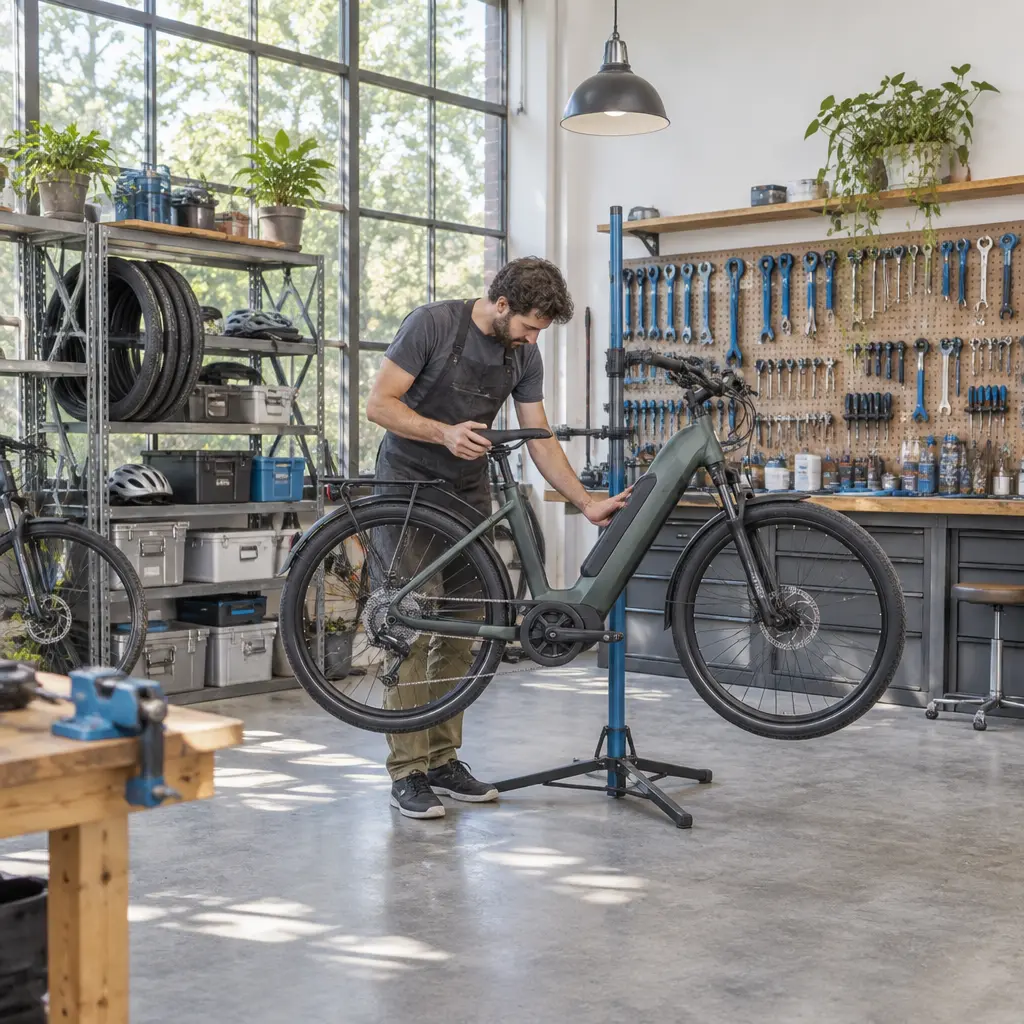
The motor, controller, sensors, display, and firmware form an integrated system. Some manufacturers provide authorized dealers with diagnostic tools, software updates, and replacement components; others restrict access or discontinue support sooner than the mechanical parts wear out. Ask whether the motor can be repaired or must be replaced as a complete unit, whether diagnostics are available locally, and how long electronic parts are expected to remain in production. Bosch eBike Systems, for example, operates a specialist dealer and service network, illustrating how a branded system can provide structured support—though network coverage and service terms still vary by location and model.
Standard components and the right to repair
Standardized parts—such as tires, brake pads, chains, cassettes, and many bearings—can usually be sourced from multiple suppliers, which reduces dependence on one brand. Proprietary parts may still be justified when they improve integration, but buyers should understand the trade-off. The U.S. Federal Trade Commission’s 2021 report, “Nixing the Fix,” found that manufacturers’ repair restrictions can limit consumer choice and raise repair costs across product categories. Although the report was not specific to e-bikes, its central lesson applies: access to manuals, parts, tools, and diagnostics can materially affect the cost and feasibility of keeping complex products in use.
Lifecycle Cost Shows When Premium E-Bikes Make Sense
A higher purchase price can be reasonable when it buys lower maintenance friction, a longer useful life, stronger support, or a better fit for frequent riding. Compare total cost of ownership rather than sticker price alone. A simple calculation is: purchase price plus expected maintenance, repairs, battery replacement, and consumables, minus resale value. Because actual repair costs and battery life depend on model, climate, riding distance, and care, use written estimates and warranty terms rather than assuming that an expensive bike will automatically be cheaper over time.
A practical comparison example
Consider two illustrative e-bikes: Bike A costs $2,500 and has limited battery availability, while Bike B costs $4,000 and comes with a longer documented parts-support commitment and a local service network. If Bike A requires a $700 battery replacement after several years and has lower resale value, its initial $1,500 saving may narrow substantially. These figures are an example, not a market-wide estimate; buyers should substitute actual quotes for their chosen models. A useful comparison chart would list purchase price, warranty duration, battery replacement price, local labor rates, standard-part availability, and estimated resale value for each candidate.
Use intensity changes the value equation
Frequent commuters and delivery riders place more miles, charging cycles, and wear on a bike than occasional recreational riders. For them, rapid access to replacement parts and predictable service can prevent costly downtime. A casual rider may place greater weight on purchase price and simple local repairs. In either case, compare realistic annual distance and riding conditions, including hills, rain, cargo, and storage, because these influence wear and battery use. The Federal Highway Administration’s National Household Travel Survey documents the importance of routine travel in U.S. transportation patterns, but e-bike-specific ownership economics vary enough that a personal riding estimate is more useful than a universal savings claim.
Warranty terms are evidence, not a promise of permanence
A warranty can signal a manufacturer’s confidence, but coverage is limited by exclusions, time periods, and service conditions. Read the fine print for separate frame, motor, battery, and labor coverage; understand whether normal capacity loss is excluded; and confirm whether authorized servicing is required. Also ask what happens if the brand or a component supplier stops operating. A long warranty is most valuable when paired with local service, available replacement parts, and a clear process for claims.
How Buyers Can Verify Craftsmanship and Service Support
Because premium claims are difficult to judge from a showroom finish, buyers should verify the ownership system around the bike. The following checks turn broad promises about quality and durability into comparable evidence.
- Request the written warranty for the frame, battery, motor, and other electrical components.
- Ask for the current price and estimated availability of a replacement battery, display, controller, and motor.
- Confirm which nearby shops are authorized and whether they service the exact model and model year.
- Check whether standard drivetrain, brake, wheel, and tire parts can be replaced with widely available alternatives.
- Ask for maintenance schedules, diagnostic procedures, and the availability of repair manuals or service records.
- Inspect the bike’s fit, welds or joints, cable routing, fasteners, and finishing, while treating appearance as only one quality signal.
- Verify battery and charger safety certifications applicable in the buyer’s jurisdiction, and follow the manufacturer’s charging instructions.
- Compare the likely full lifecycle cost using actual service and replacement quotes rather than brand reputation alone.
Conclusion: Craftsmanship Is Most Valuable When It Can Be Maintained
Premium e-bike value rests on two connected attributes: careful craftsmanship and long-term serviceability. Skilled assembly, thoughtful fit, and strong quality control can improve the ownership experience, while accessible batteries, standard components, repair support, and clear warranties help keep the bike useful. Neither a high price nor a hand-built label proves durability on its own. Before buying, compare the complete service ecosystem and calculate costs over the years you expect to ride. Ask dealers for written parts and warranty information, test-ride the bike, and choose a model whose maker and local shops can support it beyond the first sale.
Sources: U.S. Consumer Product Safety Commission, E-Bike Safety, https://www.cpsc.gov/Safety-Education/Safety-Education-Centers/E-Bike-Safety; U.S. Department of Energy, Lithium-Ion Battery, https://www.energy.gov/energysaver/lithium-ion-battery; New York City Fire Department, Lithium-Ion Batteries, https://www.nyc.gov/site/fdny/safety/fire-safety/lithium-ion-batteries.page; European Commission, Ecodesign for Sustainable Products Regulation, https://commission.europa.eu/energy-climate-change-environment/standards-tools-and-labels/products-labelling-rules-and-requirements/ecodesign-sustainable-products-regulation_en; Federal Trade Commission, Nixing the Fix: An FTC Report to Congress on Repair Restrictions, 2021, https://www.ftc.gov/reports/nixing-fix-ftc-report-congress-repair-restrictions; Bosch eBike Systems, Service and Dealer Search, https://www.bosch-ebike.com/en/service/dealer-search; Federal Highway Administration, 2022 National Household Travel Survey, https://nhts.ornl.gov/.