
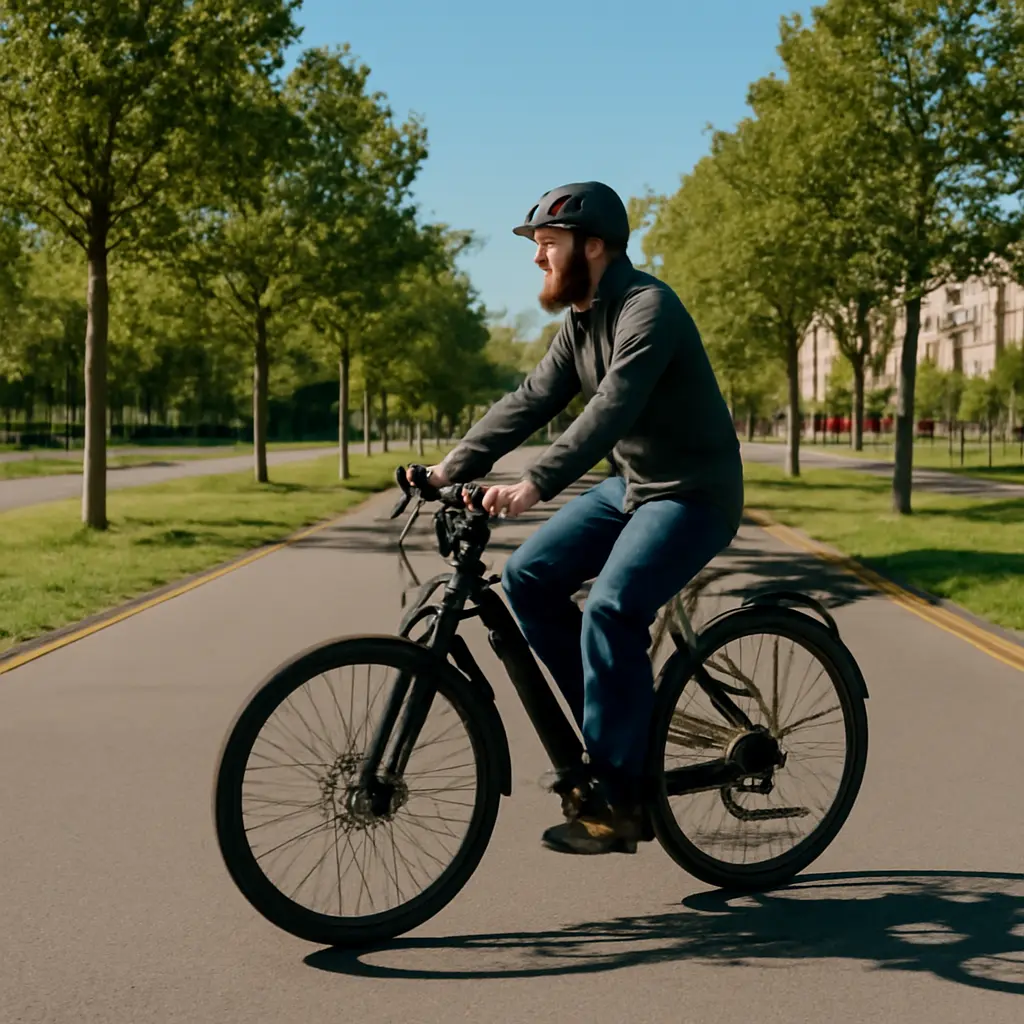
An e-bike is a bicycle with an electric motor that assists the rider, subject to the definitions and limits set by local law. On city paths, authorities commonly regulate five things: where e-bikes may travel, how fast they may go, which class of e-bike is permitted, how riders must behave around others, and where bikes may be parked or stored. The details vary by jurisdiction and by path owner, but the rules matter: the U.S. Federal Highway Administration reports that shared-use paths serve people walking, cycling, and using other nonmotorized modes, making speed management and safe passing central to how these routes work.
Path access rules define where e-bikes may ride
Path access rules specify which vehicles and users may use a route. The Federal Highway Administration describes shared-use paths as facilities separated from motor traffic and intended for nonmotorized travel, including walking and bicycling. Whether a particular e-bike qualifies to use one depends on the path manager’s regulations and the local legal definition of an e-bike.
Permitted paths and local exclusions
A city may allow e-bikes on paved multiuse paths but prohibit them on narrow trails, nature preserves, or routes designated for nonmotorized use. Rules can also differ between city, county, state, and private land. Riders should check posted signs and the relevant parks or transportation agency’s rules rather than assume that permission on a nearby bike lane applies to a shared path.
E-bike classes and access
Many U.S. jurisdictions use the three-class framework described by PeopleForBikes: Class 1 provides pedal assistance up to 20 mph; Class 2 has a motor that can propel the bike without pedaling, generally up to 20 mph; and Class 3 provides pedal assistance up to 28 mph. These categories are not a universal permission slip: states and local path managers can set different access rules, and some restrict Class 3 bikes on certain trails.
Speed limits and riding pace protect shared-path users
A path speed rule sets a maximum or requires riders to travel at a safe speed for conditions. The distinction is important: a posted limit is a ceiling, not a target, and a rider may need to slow down further when passing pedestrians, navigating a blind corner, or encountering congestion.
Posted limits and safe speed
Authorities may post a numerical limit, impose a lower limit in busy areas, or require users to ride at a reasonable speed. Rules vary by location; there is no single nationwide e-bike speed limit for every city path. The National Park Service, for example, makes e-bike access and operating conditions subject to the rules for each park and route, illustrating why riders should verify local requirements before setting out.
Speed enforcement and design
Path managers may use signs, education, patrols, or design measures such as curves and narrowed entrances to encourage slower riding. Enforcement can focus on unsafe behavior as well as a posted number. The Federal Highway Administration’s shared-use-path guidance emphasizes designing for a mix of users, so speed management is part of the broader task of reducing conflicts between faster and slower travelers.
Rider conduct rules govern passing and yielding
Rider conduct rules explain how people should share space, including passing, yielding, signaling, and maintaining control. These requirements are especially relevant on paths used by pedestrians, children, runners, and people with disabilities, where a quiet or quick-moving e-bike may approach unexpectedly.
Passing, yielding, and warning
Local rules commonly require riders to pass on the left when safe, give pedestrians room, and provide an audible warning before overtaking. The exact wording varies. A bell or clear verbal call can help, but riders should still slow down and leave adequate space; a warning does not make an unsafe pass acceptable.
Control, direction, and equipment
Authorities may require riders to keep right except when passing, obey signs and signals, and maintain control of the bike. State law may separately regulate lights, brakes, and helmets. The Centers for Disease Control and Prevention identifies helmets as an important measure for reducing the risk of head injury in bicycle crashes, while helmet requirements themselves differ by age, e-bike class, and jurisdiction.
E-bike classification and equipment rules determine legal operation
Classification rules identify what counts as an e-bike and distinguish it from a moped or motor vehicle. They often depend on motor assistance, maximum assisted speed, and whether the bike can move under motor power without pedaling. Getting the classification wrong can affect path access, licensing, registration, helmet obligations, and where the vehicle may legally operate.
Motor and speed definitions
The U.S. Consumer Product Safety Commission defines a low-speed electric bicycle for federal consumer-product purposes as a two- or three-wheeled vehicle with fully operable pedals and an electric motor of less than 750 watts, whose maximum speed on a paved level surface, when powered solely by the motor and ridden by an operator weighing 170 pounds, is less than 20 mph. This federal definition does not replace state traffic laws or local path rules, which may classify or restrict e-bikes differently.
Helmets, lights, and modifications
Helmet and lighting requirements depend on the applicable law and can vary with rider age, bike class, and time of day. Some jurisdictions also restrict modifications that raise a bike’s assisted speed beyond the limits for its class. Riders should confirm the manufacturer’s specifications and local rules; changing a speed setting may change how the vehicle is classified and where it is allowed.
Parking, charging, and access rules manage public space
Parking rules determine where an e-bike may be left and whether it can be charged or stored on public property. These rules support clear paths for pedestrians and emergency access, while also addressing the practical needs of e-bike users and shared-mobility services.
Parking without obstructing the path
Cities may require bikes to be parked at racks or designated corrals and prohibit blocking sidewalks, curb ramps, trail entrances, or emergency routes. Shared e-bike operators may also face fleet-size, parking-zone, and relocation requirements. The U.S. Access Board’s accessibility standards emphasize unobstructed pedestrian routes, reinforcing why a bike left across a walkway can create a barrier for wheelchair users and others.
Charging and battery safety
Charging rules may apply in apartment buildings, public facilities, transit stations, or other shared spaces. The U.S. Consumer Product Safety Commission warns consumers to use the charger supplied or approved by the manufacturer, follow battery instructions, and avoid charging damaged or recalled batteries. Local fire codes and building policies may impose additional restrictions, so riders should check both the path authority’s rules and the rules for the place where they store or charge the bike.
Conclusion: Check the five rules before riding
City authorities regulate e-bike path access, speed, rider conduct, vehicle classification and equipment, and parking or charging. Those five areas help balance convenient low-emission travel with the safety, accessibility, and comfort of everyone using public routes. Because the rules differ among cities and path managers, riders should read posted signs, consult the responsible agency’s current guidance, and choose a speed and passing distance appropriate to the conditions.
For further reading, consult your local transportation or parks department, your state’s e-bike statutes, and the federal guidance cited below. Clear, consistent rules—paired with considerate riding and well-designed paths—can help cities make shared routes work for more people.
Sources: Federal Highway Administration, Shared Use Path Planning and Design Guide, https://www.fhwa.dot.gov/environment/bicycle_pedestrian/publications/shared_use_paths/; PeopleForBikes, E-Bike Policy, https://www.peopleforbikes.org/electric-bikes/policies-and-laws; National Park Service, Electric Bicycles, https://www.nps.gov/subjects/biking/e-bikes.htm; U.S. Consumer Product Safety Commission, Electric Bicycles, https://www.cpsc.gov/Safety-Education/Safety-Education-Centers/Electric-Bicycles; Centers for Disease Control and Prevention, Bicycle Safety, https://www.cdc.gov/transportation-safety/about/bicycle-safety.html; U.S. Access Board, Public Right-of-Way Accessibility Guidelines, https://www.access-board.gov/prowag/; U.S. Consumer Product Safety Commission, E-Bike Battery Safety, https://www.cpsc.gov/Safety-Education/Safety-Education-Centers/E-Bike-Battery-Safety.


