
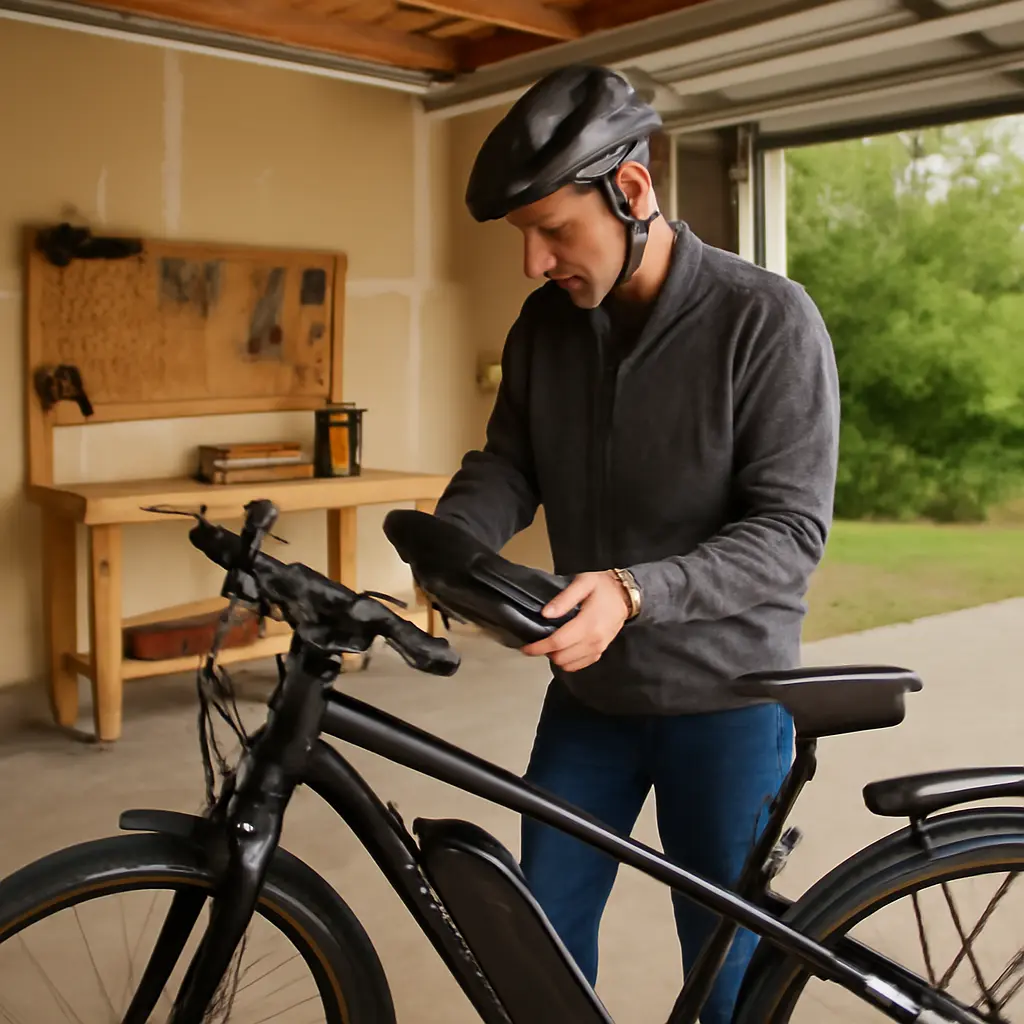
An e-bike battery is a rechargeable pack of lithium-ion cells that stores energy for the motor and controls how far an electric bicycle can travel. Most failures do not happen because a battery suddenly “wears out” on schedule: they result from accumulated heat, time spent fully charged or empty, deep discharge, physical damage, water intrusion, or faults in the battery-management system. The U.S. Department of Energy says lithium-ion batteries generally lose capacity as they age, with temperature and usage affecting that decline. Understanding those mechanisms—and recognizing warning signs—helps riders extend battery life and avoid serious fire risks.
Why e-bike batteries fail: the main causes
Battery failure can mean several different things: reduced range, inability to charge, sudden power cutouts, or a pack that becomes unsafe. The central component is the lithium-ion cell, but the complete battery also includes wiring, connectors, a case, and a battery-management system (BMS). The BMS monitors conditions such as voltage and temperature and can disconnect the pack when it detects a problem. A failure in any one of these parts can make the whole battery unusable.
A useful distinction is between ordinary capacity loss and a safety-critical fault. Gradual loss of range is common as cells age; swelling, smoke, unusual heat, leaking, or a burning or chemical smell are not normal aging signs. The U.S. Consumer Product Safety Commission (CPSC) warns that lithium-ion battery fires can spread rapidly and produce intense heat and toxic smoke. Treat unusual physical or thermal changes as a safety issue, not a routine maintenance problem.
Cell aging and lost capacity
A battery’s cells gradually store less energy as they experience charging and discharging cycles and simply spend time in service. This is often called capacity fade. It may show up as shorter rides, a faster drop on the battery display, or reduced ability to deliver power under load. The U.S. Department of Energy identifies time, temperature, and cycling conditions as factors that influence lithium-ion battery performance and lifetime. The rate varies by cell design, pack construction, rider demands, and care, so a single “expected lifespan” cannot reliably predict every battery’s service life.
Heat, cold, and storage conditions
Temperature affects both performance and aging. High temperatures can accelerate unwanted chemical reactions inside cells, while charging a very cold battery can damage it. Cold weather can also temporarily reduce available range, which is different from permanent capacity loss. Bosch eBike Systems advises allowing a cold battery to warm to room temperature before charging and avoiding prolonged exposure to high temperatures. Follow the temperature limits in the manual for the specific battery; there is no one safe charging range for every model.
Charging habits and deep discharge
Keeping a battery at a very high or very low state of charge for long periods can add stress. Leaving it empty for months may allow the pack voltage to fall too far for the BMS or charger to recover safely. Conversely, storing it fully charged in a hot place can hasten aging. Guidance differs among manufacturers: Bosch, for example, recommends storing its batteries partially charged in a dry, cool location. Check the owner’s manual for the maker’s storage percentage and maintenance schedule rather than relying on a universal rule.
Water, impact, and electrical damage
A cracked case, damaged connector, incorrect charger, or water intrusion can lead to corrosion, short circuits, or an intermittent connection. E-bike batteries are designed to meet particular environmental limits, not to be submerged or pressure-washed. A drop or collision can also damage cells internally even if the outside appears intact. If a battery has been crushed, punctured, immersed, or involved in a crash, stop using and charging it and ask the manufacturer or a qualified service provider to assess it.
How battery design and use shape failure risk
Battery risk is not determined by chemistry alone. Cell quality, pack assembly, protection circuitry, charger compatibility, and use conditions all matter. The National Fire Protection Association (NFPA) and CPSC emphasize using products and chargers designed for the specific battery system and avoiding damaged or modified packs. A familiar brand name on a bicycle does not guarantee that a replacement pack or charger is compatible; verify the exact model and manufacturer approval.
Battery-management system and pack components
The BMS helps protect cells by monitoring operating conditions and controlling charging or discharge. It cannot repair an aged cell, reverse physical damage, or make an unsuitable charger safe. Faulty wiring, a failed sensor, loose connections, or an imbalanced group of cells can trigger cutouts or charging problems. Repeated resets, unexplained shutdowns, or error codes deserve diagnosis by an authorized technician—not improvised repair or bypassing of the BMS.
Charger compatibility and modified batteries
A charger must match the battery’s specified voltage, connector, and charging requirements. A plug that fits is not proof of compatibility. CPSC recommends using the charger supplied with the device or one approved by the manufacturer, and warns against using batteries that have been altered or rebuilt with incompatible parts. Avoid homemade adapters, unverified replacement packs, and chargers from unknown sellers. For a replacement, confirm compatibility with the bicycle and battery maker.
Why some failures become fires
Lithium-ion cells can enter thermal runaway when an internal failure produces heat that triggers further reactions. The resulting chain reaction may release flammable gases and spread from cell to cell. The U.S. Fire Administration identifies e-bike and other micromobility battery incidents as a growing fire-safety concern and advises charging with the manufacturer-provided equipment, keeping batteries away from exits, and not charging while sleeping. These precautions reduce exposure but cannot make a damaged battery safe.
How to make an e-bike battery last longer
Good battery care means following the manufacturer’s instructions, reducing unnecessary heat and prolonged extreme states of charge, and inspecting the pack regularly. It does not mean opening the battery, attempting cell-level repairs, or leaving a suspect pack connected to a charger. The exact recommendations depend on the battery system, so the owner’s manual remains the primary source.
Charge and store it according to the manual
- Use the supplied or manufacturer-approved charger and charge in a dry, well-ventilated area.
- Avoid charging near combustible materials, on escape routes, or while asleep or away from home.
- For longer storage, use the state-of-charge guidance in the manual; do not leave the pack empty for an extended period.
- Keep the battery away from direct sun, heaters, and other sources of excessive heat, and observe the manufacturer’s temperature limits.
- Disconnect the charger when charging is complete if the manufacturer instructs you to do so.
Inspect and handle the pack carefully
Check periodically for cracks, dents, swelling, corrosion, damaged cables, loose connectors, or unusual odors. Keep contacts clean and dry according to the manual, and avoid high-pressure water around the battery and electrical connections. Do not drop, crush, puncture, or leave the pack where it could be struck. If a battery behaves differently after an impact or begins cutting out unexpectedly, stop riding until it has been checked.
Match riding demands to conditions
Heavy loads, steep climbs, high assistance levels, and frequent hard acceleration can increase energy demand and battery temperature. In cold conditions, range may be lower; plan a margin rather than relying on the warm-weather distance estimate. Use the bicycle’s display as an estimate, not a precise measurement of remaining capacity. If the battery or motor becomes unusually hot, stop and allow it to cool in a safe location before continuing.
Warning signs, response, and responsible disposal
Signs a battery needs professional attention
Arrange qualified service if the pack will not charge, loses range unusually quickly, repeatedly shuts off, displays persistent fault codes, or has visible damage. Stop using it immediately if it is swollen, leaking, hissing, smoking, unusually hot, or giving off an abnormal odor. Do not charge, open, or transport a visibly failing battery yourself. If it is smoking or burning, move away, warn others, and call emergency services; do not attempt to handle the pack.
Safe repair and end-of-life handling
Battery repair should be handled by the manufacturer or a qualified service provider using compatible parts. Never put an e-bike battery in household rubbish or curbside recycling. The U.S. Environmental Protection Agency says lithium-ion batteries should be managed through appropriate battery collection or recycling channels because they can cause fires in waste and recycling facilities. Contact the battery maker, local hazardous-waste program, or a recognized battery recycler for instructions, and disclose damage before transporting a pack.
Conclusion: prevent avoidable e-bike battery failure
E-bike batteries fail through a combination of cell aging, heat, unsuitable charging or storage, physical damage, moisture, and faults in pack components. Gradual range loss is often normal; swelling, overheating, smoke, or unusual odors are urgent warning signs. Use the correct charger, follow the manufacturer’s storage and temperature guidance, inspect the battery, and get suspected faults assessed by a qualified professional. These habits protect both the battery and the people around it. For model-specific advice, consult the battery manual and the manufacturer’s service guidance, and use an approved collection route when the pack reaches end of life.
Sources: U.S. Department of Energy, “Battery Performance and Cost,” https://www.energy.gov/eere/vehicles/articles/fotw-1234-january-10-2022-battery-performance-and-cost; U.S. Consumer Product Safety Commission, “Lithium-Ion Battery Safety,” https://www.cpsc.gov/Safety-Education/Safety-Education-Centers/Lithium-Ion-Battery-Safety; Bosch eBike Systems, “Battery Care and Maintenance,” https://www.bosch-ebike.com/us/service/faq; National Fire Protection Association, “Lithium-Ion Battery Safety,” https://www.nfpa.org/education-and-research/home-fire-safety/lithium-ion-batteries; U.S. Fire Administration, “Lithium-Ion Battery Safety,” https://www.usfa.fema.gov/prevention/home-fires/prepare-for-fire/lithium-ion-batteries/; U.S. Environmental Protection Agency, “Used Lithium-Ion Batteries,” https://www.epa.gov/recycle/used-lithium-ion-batteries.


